Showing posts with label olive oil. Show all posts

Monday, August 31, 2009

Spicy Chili-Infused Olive Oil

This special middle eastern recipe comes to the blog courtesy of Haifa's dad. Spicy red chilis are drained of their moisture before they release their flavor and heat. The result is an olive oil that enlivens just about everything from hummus to grilled meat.

Spicy chili-infused Olive Oil

Ingredients
1 cup fresh red chilis (we used thai chilies, but peperoncini or any very hot variety will do
salt
olive oil

chili peppers

Instructions
Using rubber gloves, remove the stems and puree the chilis in food processor until roughly chopped. Using a spatula, move the chili mixture to a mesh strainer and sprinkle generously with salt (see below).

strain chilis

Put something wide and heavy (e.g., a container filled with water) directly on the chilis, then pace the strainer over a bowl in the refrigerator. Let sit for 2 days to allow any water to drain from the chilis. Move the chilis to a small container and cover with about half an inch or more of extra virgin olive oil. Stir the mixture every so often for a couple of days to let the flavors blend. As you use the oil, be sure to add a bit now and then to prevent mold from forming.

chilis draining

Thursday, August 27, 2009

Pesto

We eat this classic Ligurian sauce with linguine at least once a month. There really isn't a "recipe" for pesto, just a few basic ingredients. Because of this, the quality and proportions of the ingredients are the limiting factors. Use the freshest basil, olive oil, and cheese possible, and experiment with different amounts of each ingredient as you build the sauce. Each batch will be different than the last, and this variability is what makes pesto special.
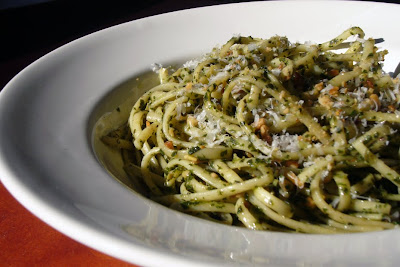
pesto pasta

Ingredients
2 1/4 cups tightly packed basil leaves, washed and dried thoroughly
2 cloves garlic
about 1/3 cup extra virgin olive oil
sea salt
freshly cracked black pepper
about 1/4 cup pine nuts
parmiggiano-reggiano (or grana padano) cheese
linguine (or any type of pasta), fresh if possible

Instructions
Toast the pine nuts over medium heat until golden brown. Be careful as they near the end of cooking, as they tend to burn quickly. Crush with a mortar and pestle, or with the back of a knife, and set aside.

Puree the basil, 1/4 cup of olive oil, and garlic in a food processor. Add more olive oil, salt, and pepper in small increments, tasting after each addition, until the sauce tastes good to you. Remember to make it a little stronger than you think is necessary, because it will be somewhat diluted when you add the pasta. Also, be careful not to add too much oil. If you do, the sauce doesn't absorb into the sauce quite as well. Pour into a deep bowl and mix in the nuts. Some recipes recommend blending the nuts with the sauce, but we prefer to add them later to preserve their texture.

Boil your pasta until al dente. Move about a tablespoon of the cooking water to the bowl of pesto before you drain the pasta. After well drained, add the pasta to the pesto and top with an extremely generous portion of grated parmiggiano-reggiano cheese and mix until pasta is coated.

The easiest way to improve your pesto is to use high-quality olive oil. In fact, a good (and usually expensive) bottle of olive oil is always good to have around to supplement a less expensive bottle used for cooking. We started using Palestinian oil and haven't looked back.

If you are really serious about pesto, you can use a mortar and pestle instead of a food processor. Crushing each leaf by hand breaks down the fibers and tends to make a more flavorful sauce. But be warned, you might be too tired to eat by the time you are done.

Tuesday, August 25, 2009

Lemon Slices in Olive Oil

This is the first recipe that we have tried from a book called Mediterranean Hot and Spicy, by Aglaia Kremezi. You can chop up the lemon peel and mix it with a salad or even eat it by itself! And the oil should take on the flavor of the lemons and work well in dressings or marinades, or wherever "preserved lemons" are called for. If nothing else, you will have a cool looking jar on your countertop. It stays fresh 3-6 months in the fridge, but we have it out at room temperature for now to let the flavors develop. So yes, we haven't even tasted it yet.

lemons in spicy olive oil

Ingredients
3-4 lemons
4-6 tablespoons sea salt
2-3 dried chilis
extra virgin olive oil

Instructions
Wash the lemons and dry thoroughly. Slice them 1/8 of an inch thick, placing the slices in a colander. Sprinkle the first layer very generously with salt. Form new layers of lemon slices and salt until you run out of both. Place the colander over a bowl in the refrigerator and let the moisture drip out of the lemons. After 24 hours, place the lemon slices on a couple paper towels and carefully press down with more towels to extract most of the remaining moisture. Cut the chilis with a pair of scissors almost up to the stem. Layer the slices in a large jar, placing the peppers in between a couple of the slices. Cover the lemons completely with extra virgin olive oil. It should take some time for the flavors to mix, maybe even a couple of weeks.

Mediterranean Hot and Spicy

Thursday, August 20, 2009

Sauteed Shrimp with Parsley and Garlic

Few meals offer so much reward for so little effort. We always order sauteed shrimp when we go out for tapas, but it tastes even better when you make it at home!

sauteed shrimp

Ingredients
1 lb shrimp
2 cloves garlic
2 tablespoons chopped fresh flat-leaf parsley
2 tablespoons extra virgin olive oil
red pepper flakes (optional
lemon juice (optional

Instructions
Mash the garlic in a mortar or with the back of a knife. Combine with the parsley.
If the shrimp still have their shells, you may prefer to remove them. If you do, you may also like to de-vein the shrimp by making a shallow incision along the bottom where you might see a dark line (see image below). Remove the digestive tube. This isn't necessary, but who want shrimp feces in their dinner? Not us. Pat the shrimp dry with a paper towel.

Heat the olive oil over high heat in a large non-stick pan. When the oil is very hot, add the shrimp and stir occasionally for 2-3 minutes. They are just about done when they turn pink. Add the garlic and parsley and cook for another minute. You may also want to add a pinch of red pepper flakes at the end of cooking. Serve immediately with fresh lemon juice.

deveining the shrimp

Shrimp purchasing advice
Almost all shrimp is frozen immediately after being caught. So-called "fresh" shrimp at the grocery store is most likely shrimp that used to be frozen and has been sitting around all day (or maybe even longer). So unless you live on the coast, you might as well buy it frozen and thaw it yourself. The price should be the same. If you are buying frozen shrimp, make sure they were individually quick frozen (IQF), and that the bag contains no other ingredients than shrimp. Shrimp are often given ambiguous names like "jumbo" and "large." The best way to know their size is to check the number on the bag.

U/12: Super-colossal
U/15: Colossal
16/20: Super-jumbo
21/25: Jumbo
26/30: Extra-large
31/35: Large
35/40: Medium
40+: Cocktail

Most shrimp sold in America come from tropical waters like the Gulf of Mexico. White and pink shrimp are usually considered to be the best. Brown shrimp are popular as well.

Learn everything you need to know about seafood in this book... we did!
Fish & Shellfish


Related Posts Plugin for WordPress, Blogger...