Showing posts with label italian. Show all posts

Monday, January 11, 2010

Bolognese Sauce

No joking around with this post. Bolognese is serious stuff. The dish originates in the northern Italian city of Bologna, also known as "the fat city." It is not just a meat sauce; the "true" ingredients are hotly debated. Thank God that the Bolognese delegation of Accademia Italiana della Cucina voted that an authentic rendition only contains beef, pancetta, onions, carrots, celery, tomato paste, broth, red wine, and milk or cream. And the rules don't stop here. The width and thickness of the tagliatelle (fresh egg noodles) with which this sauce is traditionally served are noted by a golden noodle on a plaque in the Bologna city hall.
DONT SCREW UP!

bolognese pasta

Below are the Ingredients and Instructions, mixed, as you will find them in Alice Waters' The Art of Simple Food.

Ingredients and Instructions
Heat in a large heavy-bottomed pot:
1 tablespoon olive oil
Add:
2 ounces pancetta (or bacon), diced fine
Cook over medium heat until lightly browned, about 5 minutes. Add:
1 small onion, diced fine
1 celery stalk, diced fine
1 carrot, diced fine
2 garlic cloves, finely chopped
5 sage leaves
2 thyme sprigs
1 bay leaf
Cook over medium heat, stirring occasionally, until tender, about 12 minutes.
While the vegetables are cooking, heat in a large heavy-bottomed pan, preferably cast iron:
1 tablespoon olive oil
Add and brown over medium-high heat, in two batches:
1 pound skirt steak, cut into 1/8-inch cubes
4 ounces pork shoulder, coarsely ground
Cook until the meat is a nice chestnut color. Once all the meat browned, pour in:
1 cup dry white wine
Reduce the wine by half, scraping the brown bits off the brown bits off the bottom of the pan. Add the browned meat and the deglazing juices to the tender vegetables with:
2 tablespoons tomato paste
Salt
Measure and stir together:
2 cups beef or chicken broth
1.5 cups milk
Pour enough of this liquid into the pot to bring it to the level of the meat and vegetables. Simmer gently until the meat is very tender, about 2 hours. As the liquid reduces, keep topping it up with the rest of the broth and milk, and skimming the fat that rises to the surface. Near the end, add a couple tablespoons of heavy cream. This helps tie the sauce together. When the meat is tender, remove the sauce from the heat and season to taste with more salt, if needed, add:
Fresh-ground black pepper

Monday, December 21, 2009

Butternut Squash Gnocchi

Substituting butternut squash for potato in this gnocchi recipe gives it something extra and made this a holiday-themed meal in November. The sweetness of the squash definitely complimented the wine sauce and rosemary. And obviously the melted butter didn't hurt.

butternut squash gnocchi
Ingredients
Gnocchi
1 butternut squash, peeled and seeds removed, cubed
2 tsp extra virgin olive oil
2 cups all-purpose flour, plus extra for dusting
1 cup parmesan
2 egg yolks
1/2 tsp ground nutmeg

White wine butter sauce
4 Tbsp butter
1 sprig rosemary
2 Tbsp chardonnay
salt & pepper

Instructions
Preheat the oven to 350. Place the squash on a baking sheet, drizzle with the olive oil and salt. Roast in the oven for about 35 minutes, turning once. Remove from the oven and set aside to cool. Transfer to a food processor and pulse.

In a bowl, combine the squash puree, flour, cheese, egg yolks and nutmeg and mix to form a dough. Knead the dough and form into a ball. Break a piece of dough off the ball and roll it into a 1-inch thick rope. Replenishing the flour on your board and hands when necessary, continue to form ropes until you have used up the dough ball. Using a knife, cut each rope into 1-inch pieces. Make thumb prints in each piece of gnocchi so they cook evenly.

Meanwhile, bring a pot of water to a boil.

Next, melt the butter in a pan over medium heat. Add the rosemary and wine, cook until the wine has boiled off, but do not allow the sauce to brown.

When the water is at a rolling boiling, add the gnocchi and boil until the gnocchi rise to the surface, about 3 minutes. Remove using a slotted spoon, holding them over the pot until they have thoroughly drained (you may have to do this in batches), then add gnocchi directly to the butter sauce. Season with salt and pepper and toss to coat with the sauce. Garnish with a bit more cheese and serve.

Thursday, August 27, 2009

Pesto

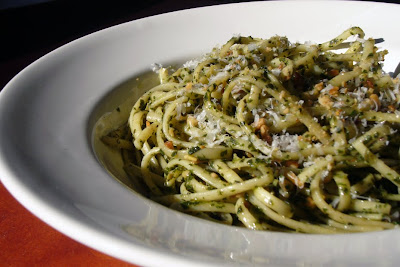
We eat this classic Ligurian sauce with linguine at least once a month. There really isn't a "recipe" for pesto, just a few basic ingredients. Because of this, the quality and proportions of the ingredients are the limiting factors. Use the freshest basil, olive oil, and cheese possible, and experiment with different amounts of each ingredient as you build the sauce. Each batch will be different than the last, and this variability is what makes pesto special.

pesto pasta

Ingredients
2 1/4 cups tightly packed basil leaves, washed and dried thoroughly
2 cloves garlic
about 1/3 cup extra virgin olive oil
sea salt
freshly cracked black pepper
about 1/4 cup pine nuts
parmiggiano-reggiano (or grana padano) cheese
linguine (or any type of pasta), fresh if possible

Instructions
Toast the pine nuts over medium heat until golden brown. Be careful as they near the end of cooking, as they tend to burn quickly. Crush with a mortar and pestle, or with the back of a knife, and set aside.

Puree the basil, 1/4 cup of olive oil, and garlic in a food processor. Add more olive oil, salt, and pepper in small increments, tasting after each addition, until the sauce tastes good to you. Remember to make it a little stronger than you think is necessary, because it will be somewhat diluted when you add the pasta. Also, be careful not to add too much oil. If you do, the sauce doesn't absorb into the sauce quite as well. Pour into a deep bowl and mix in the nuts. Some recipes recommend blending the nuts with the sauce, but we prefer to add them later to preserve their texture.

Boil your pasta until al dente. Move about a tablespoon of the cooking water to the bowl of pesto before you drain the pasta. After well drained, add the pasta to the pesto and top with an extremely generous portion of grated parmiggiano-reggiano cheese and mix until pasta is coated.

The easiest way to improve your pesto is to use high-quality olive oil. In fact, a good (and usually expensive) bottle of olive oil is always good to have around to supplement a less expensive bottle used for cooking. We started using Palestinian oil and haven't looked back.

If you are really serious about pesto, you can use a mortar and pestle instead of a food processor. Crushing each leaf by hand breaks down the fibers and tends to make a more flavorful sauce. But be warned, you might be too tired to eat by the time you are done.

Friday, June 19, 2009

Champagne Risotto with Scallops

As if risotto isn't decadent enough, substituting champagne for the usual white wine really pushes this one over the edge. So if you ever find yourself reincarnated as the chef for the Medici family in Renaissance Florence, you know what to make.

scallop risotto
Ingredients
2 T butter
1/4 cup chopped green onions
1 cup arborio rice1 cup champagne
chicken broth (usually several cups)
1/4 lb. scallops
1/2 c freshly grated parmesan (probably more)

Instructions
Put the chicken broth in a sauce pan and heat over medium/low heat. Meanwhile, saute onions in melted butter for about 3 minutes, add rice and cook in butter for about 2 minutes until opaque, add 1 c champagne and simmer rice until liquid is almost gone. Add 1 c of the hot broth to rice pan and stir rice until liquid is absorbed. Continue until the rice is chewy. Add cheese. For more detailed instructions, see this recipe for 3 cheese risotto.

Sear the scallops just before the risotto is done. The most important things to keep in mind when searing scallops are (1) use a very hot, non-stick pan, and (2) make sure the scallops are dry before searing. If the pan is not hot enough, the scallops will release water and never obtain the perfect sear. So pat your scallops dry with a paper towel while the pan heats up. Place about 1/2 a tablespoon of butter in the pan as it heats, and add the scallops when the pan is almost smoking hot. Do not crowd the pan, which is another enemy of a good sear. We usually sear bay scallops for a only 30 seconds per side (sear sea scallops about 1 minute per side). Just keep an eye on them and flip them when they have a golden brown crust. If you have to sear them in two batches, wipe down the pan with a paper towel between batches, add new butter, and start over.

Served the seared scallops over the finished risotto with a generous dusting of parmesan and chopped parsley.

Scallops 101
We used bay scallops here, but sea scallops are more common, larger, and would perhaps be easier to sear. In fact, we haven't seen any recipes for seared bay scallops, but thought we would give it a try. Sea scallops are usually about two inches long and 1.5 inches thick, whereas bay scallops are much smaller. Calico scallops are often sold as 'bay scallops,' but can be detected by their opaque appearance around the edges. Apparently, they lose their natural flavor when shucked so be careful not to get ripped off.

Other recipes you may like:
3 cheese risotto recipe
shrimp scampi recipe

Sunday, April 19, 2009

Tuscan Beef and Pepper Stew

This recipe is from Simply Tuscan, by Pino Luongo. Also known as Peposo (from the large amount of black pepper), this stew is worth the effort.

Ingredients
1/2 cup extra virgin olive oil
2 pounds beef stewing meat
2/3 cup finely chopped carrot
2/3 cup finely chopped onion
2/3 cup finely chopped celery
salt to taste
2 cups red wine
3 cups chicken stock
1/3 cup tomato sauce
1 pound butternut squash, peeled, seeded, and cut into 1-inch cubes (about 3 cups)
2 T crushed black peppercorns

Instructions
In a heavy casserole over high heat, warm half of the oil. Add the beef and sear it on all sides until dark brown. Keep some spacing between the cubes to prevent them from steaming. You won't be able to sear all the beef at once, so do it in batches. Set the beef aside when done.

Reduce the heat to low and add the remaining oil to the casserole. Add the carrot, onion, and celery, and some salt. Mix the seared beef with the vegetables and cook for about 2 minutes. Add the red wine and scrape the browned beef from the bottom of the pan. This is critical for developing the flavor. Cook for about 10 minutes, or until some of the liquid appears to have evaporated. Add the stock and the tomato sauce and cook for 15 minutes more. Add half of the squash and all the peppercorns. The original recipe calls for 4 T peppercorns, which seemed overpowering. You may even want to use less than 2 T. Bring to a boil, cover, reduce heat to low, and simmer for at least an hour. Keep the lid slightly open if you want some of the water to evaporate. When the meat is tender, add the rest of the squash and cook until tender, about 20 minutes. Add salt if you wish.

This stew is excellent served over creamy polenta!

Saturday, March 28, 2009

Homemade Pasta with Sage Butter

So simple! The brown butter gets kind of caramelized and mixes with the sage perfectly.

homemade pasta

Ingredients for Pasta (tagliatelle is best)
1 2/3 c flour, plus more for sprinkling on counter
3 eggs

Ingredients for Sauce
1 stick salted butter
6-8 sage leaves, minced

Instructions for pasta
Refer to homemade pasta recipe.

Instructions for sage butter sauce
When you've gotten the pasta dough ready & into the fridge, begin boiling your pasta water. Then in a large sauce pan melt the butter on low heat until browned, not burnt. It will begin to smell like caramel corn. Keep the butter over very low heat while you cut pasta. When you add the pasta to boiling water, add the minced sage to your brown butter. It will get a little crispy.


Once the pasta is cooked, put it in a large bowl and pour the butter sauce over it. Toss lightly. Makes enough for 4.

Monday, January 26, 2009

Sunday Sauce

We usually make this tomato sauce on Sunday nights. Simple and delicious.

Ingredients
2-3 tablespoons olive oil
4-5 cloves garlic, smashed with the side of a knife
1 (or more) pinch crushed red pepper flakes
3-4 tablespoons italian parsley
~24 oz. can pureed tomatoes
1 or two handfuls of picholine olives, or use any olives you like.
linguine

Directions
Heat the olive oil in a medium sized pan over low heat. Place the smashed garlic cloves in the pan before the oil is hot and let them turn golden. This should take 5-7 minutes. Be sure to flip them every so often so that they do not burn. Remove the garlic. I throw it away at this point because the oil is nicely scented. Stir the parsley into the oil and cook briefly, about 30 seconds. Add the tomato puree, pepper flakes, and the olives. Cook for about 20-30 minutes on low with the lid off. The olives season the sauce, so don't add any extra salt. Mix a little less than a pound of linguine into the sauce and serve with fresh parsley on top. This makes excellent leftovers for Monday.

Wednesday, January 21, 2009

Tomato Bread Soup


Amazing winter soup we discovered at the only good restaurant in Sheboygan.

Ingredients
4 tablespoons olive oil
1 pinch crushed red pepper flakes
4 cups stale white bread, cut into cubes
2 tablespoons olive oil
2 cloves garlic, minced
1 onion, finely chopped
2 (12 ounce) cans diced tomatoes (or pureed tomatoes if you prefer a smoother soup)
6 cups low-sodium chicken broth
1 tablespoon chopped fresh parsley
1/4 cup grated Parmesan cheese
3 tablespoons chopped fresh basil

Directions
Heat 4 tablespoons olive oil in a large stockpot over medium heat. Stir the pepper flakes into the oil and add the bread cubes. Cook the bread cubes until lightly brown. Remove bread cubes to paper towels, reserving the oil in the stockpot.

Pour 2 tablespoons olive oil into the stockpot. Cook the garlic and onion in the oil until the onion has softened, about 5-8 minutes. Stir in the tomatoes, basil and drained bread cubes; cook about 10 minutes. Add the broth, parsley, and Parmesan cheese to the tomato mixture; bring to a boil. Reduce heat to low and simmer 20 to 30 minutes. Garnish with basil before serving.

Sunday, January 18, 2009

Handmade Pasta with Eggplant and Fresh Tomatoes


This sauce is best when the pasta is homemade (worth the effort).

Ingredients
Two small eggplants
salt
olive oil
6 garlic cloves, finely chopped
2 lbs fresh tomatoes, peeled, seeded, and chopped
1 handful fresh basil torn into small pieces
6 oz. fresh mozzarella, diced
black pepper

fresh pasta (tagliatelle is best)
flour
3 eggs

Directions

Preparing the eggplants:
Cut the stems and navels off the eggplants. Cut into 1/4 in. thick slices, sprinkle with salt, and stand upright in a colander for 40 minutes to drain off the juices. Blot the salt from the slices with paper towels. Preheat oven to 450 degrees. Brush both sides of eggplant slices with olive oil, place on baking sheets and roast for about 10-15 minutes. The time may vary, but just be sure to roast them until they are golden brown. Once cooled, dice and set aside.

Making the pasta:
While the eggplants are draining or roasting, heat a pot full of water and whisk 3 eggs in a bowl. Slowly stir in 1 and 2/3 cups of flour to the egg mix. You can use either all all-purpose flour or a mix of half semolina/half all-purpose. I find it easier to do the mixing in a bowl rather than on a counter. Stir until the mixture can be worked with your hands. Dump contents of bowl on a well floured surface and knead with your hands until it is elastic (about 5 minutes) adding flour as needed. Separate the dough into palm sized balls, cover with plastic wrap, and refrigerate 20-30 minutes. Flatten 1/4 in. thick rectangles and run through a pasta machine progressing from the thickest to thinnest settings until you have long sheets. Be sure to run the sheets though the first settings several times, folding in half before each pass. You may need to cut these long sheets in half after the last pass, before you pass though the tagliatelle setting on your machine. I place the pasta on a laundry drying rack until I cook them. You may need to do all this while cooking the sauce. When the water is boiling, add a generous pinch of salt and return to a boil. Add the pasta to the water when the sauce is done. The pasta will take a mere 1-2 minutes to cook. Take out before it is completely done, as it will cook in the colander while it drains. 

Making the sauce:
Warm olive oil in a large skillet over med-low heat. Add garlic and saute until softened, 3-4 minutes. Add tomatoes, basil, 1/2 teaspoon salt and stir well. Simmer until excess water evaporates (about 15 minutes). Add diced eggplant, mozzarella, and pepper and toss well. Turn off heat, cover pan for several minutes until mozzarella is softened. Add the fresh pasta to the sauce and serve.

Three Cheese Risotto

Eat this when it is negative thirty degrees outside and you need to slip into a food coma.

Ingredients
1 3/4 cups risotto rice
3 tbsp butter (or olive oil if you prefer)
1 small white onion, chopped
4 cups chicken stock
1 cup sparkling dry white wine or champagne (like Asti Spumante)
1/2 cup Fontina cheese, diced
1/2 cup Parmesan cheese, grated
1/2 cup Mozzarella cheese, diced
salt and black pepper
fresh parsley, as a garnish

Directions
Heat the chicken stock in a pan or in the microwave and have at hand before you start the recipe. Then, in a heavy saucepan, melt the butter until it begins to foam. Toss in the onion and stir lightly until it has softened (about 6 to 8 minutes).

Add the rice to the butter and onion and stir until the grains start to swell, then add the wine.

Stir the mixture until the rice has absorbed most of the liquid and it has stopped sizzling. Pour in a small amount of the stock. Season with the salt and pepper.

Turn the heat down to a low setting, and stir until the liquid has been absorbed by the rice.

Then add a little more stock, letting the rice absorb it before you add more. Stir, stir, stir! (The stirring is essential, do not stop or the rice will stick to the bottom of the pan and burn)

Cook for approximately 25 to 35 minutes, the rice should look tender and creamy.

Turn off the heat and add the cheeses.

Stir some more, until the cheeses are melted, and season some more if needed. Pour the finished dish into a serving bowl and top with chopped parsley. Eat. Fall asleep at 9pm. Your arm will be very sore.

Related Posts Plugin for WordPress, Blogger...